

Most dogs, with adequate antifungal therapy, do recover from this disease, especially with early diagnosis and intervention.
Dogs with uncomplicated (mild to moderate) infection only in the lungs have the best prognosis for recovery and usually respond the quickest to treatment. However, dogs can have extensive lung disease that is so severe and progressive that they require hospitalization, or surgery to remove diseased lung, or may die.
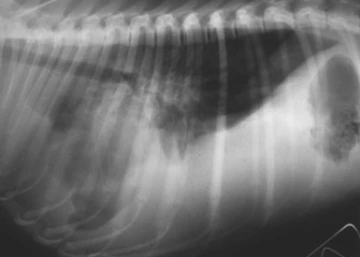
Complicated Valley fever in a dog's lung
Dogs with disseminated infection
As with lung infections, the majority of dogs with disseminated disease respond well to medication and lead normal lives, though they often require prolonged drug treatment (12-18 months). A small proportion of animals must take medication for life, and another small number, unfortunately, die of Valley fever in spite of drug treatment. Dogs with disease in many locations in their bodies, dogs responding poorly to treatment, and dogs who have progressive disease in the face of medication, carry the most guarded prognoses.
Dogs with Valley fever in the brain (seizures, etc)
Dogs with valley fever in the brain have a good to guarded prognosis for recovery. Dogs that do not respond well to antifungal treatment are more likely to die or be euthanized, while dogs, even if initially very sick, that improve promptly when treated (estimate greater than 80%) are likely to recover and lead mostly normal lives. Some of these dogs will need long term or lifetime antifungal treatment. Dogs with Valley fever in the brain may also transiently need anti-seizure medication and steroids to reduce brain swelling in addition to antifungal medication.
Dogs with bone infections and the pain that goes with them
Pain medicine and anti-inflammatories will probably be prescribed by your veterinarian. Modern multi-modal pain protocols can greatly increase your dog’s comfort and mobility, attitude and appetite, while they are very sick. If your veterinarian prescribes these medicines, it is important to give them as directed and talk to your veterinarian if you are concerned about side effects or they don’t seem to be helping enough.
Dogs with severe or widespread Valley fever
For dogs that are seriously ill, requiring hospitalization and supportive therapy, the prognosis can be grave.
With aggressive treatment, possibly including intravenous antifungal medication, these patients may get well. Some dogs do not recover in spite of everyone's best efforts, either due to the severity of illness at the time of diagnosis or because of long-standing, poorly responsive disease. Fortunately, they represent a minority of dogs with Valley fever.
Statistics regarding how many dogs recover compared to those which do not are not available, but in general, more than 90% of dogs respond and recover.
Stopping Treatment and Prognosis
Treatment of Valley fever in your dog is monitored by rechecks with your veterinarian.
Your veterinarian will examine your dog to look for improvement as well as performing blood tests and possibly x-rays to monitor progress and make sure the medication is not harming your dog. If your dog is very ill, rechecks may be frequent at first. As the disease stabilizes and recovery becomes apparent, your veterinarian will probably only need to evaluate your dog every few months.
It is very important to continue medicating your dog as directed until the veterinarian confirms that the blood tests are improved and tells you to stop medication. If you stop treating too soon, symptoms may recur. If symptoms recur after your dog is taken off medication, your veterinarian will probably recommend resuming treatment.
Can Valley fever relapse in dogs?
Valley fever is well known to relapse in both humans and dogs.
In particular, cases of disseminated infection have a 30-50% rate of relapse in humans, no matter how well the initial infection was treated. It is not known how many canine cases of Valley fever relapse, but relapses are not uncommon and the rate may be similar to people.
Relapses are treated with longer courses of medication, or more potent treatments may be tried, like voriconazole or posaconazole. Dogs that experience more than one relapse or get very sick with the relapse should have lifetime treatment with medication considered.
Do dogs get reinfected with Valley fever?
A brand new infection from spores in the environment is rarely documented in humans. It is not known at this time whether dogs are susceptible to reinfection or whether recurring illness is always due to the original infection.